.png)

Top 5 Medicinal Plants of the Amazon | Pure Brazil Tour
- Aug 2
- 8 min read
The Brazilian Amazon is much more than a verdant landscape: it is a veritable living library, its pages made of bark, resins, and leaves. For centuries, Indigenous peoples have developed an incomparably rich pharmacopoeia, passed down orally from generation to generation. Today, more than 650 Amazonian plant species are officially recognized for their medicinal properties, and the forest continues to fuel global scientific research. Exploring the medicinal plants of the Amazon is also exploring ancestral knowledge that native guides still carry with pride.
The Amazon rainforest is home to over 40,000 plant species, many of which have documented medicinal properties. This staggering number represents only a fraction of what Indigenous communities have known and used for millennia. Traditional Amazonian medicine is more than just a list of remedies; it is based on a worldview in which health, nature, community, and spirituality are inextricably linked.
Medicinal plants of the Amazon: a living pharmacopoeia
Summary
Jungle Pharmacy: 5 Medicinal Plants from the Amazon and Their Traditional Uses
Medicinal plant from the Amazon | Parts used | Main traditional uses |
Guaraná (Warana) | Bright red seeds | A natural tonic to combat fatigue, improve concentration and support endurance during long days in the forest. |
Copaiba oil | Resin from the trunk yields an oil | Powerful anti-inflammatory and natural antiseptic for treating skin wounds, ulcers, infections and joint inflammation. |
Cat claw | Vine bark | Decoction to strengthen natural defenses, relieve joint pain related to rheumatism and support convalescence. |
Annatto | Seeds rich in pigment | Used against malaria and asthma, for certain kidney pains and as a light skin protectant thanks to its antioxidant properties. |
Jambu | Leaves and flowers | Local anesthetic for dental pain, antiseptic for minor wounds and skin infections, functional food in Amazonian cuisine. |
A forest pharmacy: what are we talking about?
Uses of medicinal plants from the Amazon
The uses of these plants cover a very wide range. They include preparations to support digestion, boost immunity, relieve inflammation, treat skin infections, and regulate metabolism. Preparation methods vary depending on the species and traditions: decoctions of bark or leaves, cold macerations, oils and resins extracted from the tree, and poultices applied directly to the skin. This botanical knowledge is now central to much research in phytotherapy, cosmetics, and pharmacology.
Botanical knowledge at the heart of research
Visiting the Amazon with native guides means having access to this living knowledge, far beyond what any book can convey.

Guarana, the energy of the forest peoples
Origins and traditional uses of guaraná
Guarana is arguably the best-known Amazonian plant outside of Brazil, often reduced to an ingredient in energy drinks. Its reality is far richer. This climbing plant, whose bright red seeds contain a higher concentration of caffeine than coffee, has been used for centuries as a natural tonic by the peoples of the rainforest.
Among the Sateré-Mawé, an indigenous people living in the Rio Negro region, guarana is called Warana. It is not simply a stimulant: it is a sacred plant, linked to their cosmology, prepared using traditional techniques passed down through generations. The seeds are dried, grated onto a dried fish tongue, and then mixed with water. This preparation is used to combat fatigue, improve concentration, and support endurance during long days in the forest. Sateré-Mawé Warana is also recognized as a Slow Food Presidium product, a distinction that values its cultural origin and the ethical supply chains that support it.
During a stay in the Brazilian Amazon, meeting communities that still cultivate and prepare guaraná in the traditional way is an experience that leaves a lasting impression.
Copaiba oil, the anti-inflammatory of the canopy
Properties and uses of copaiba oil
Copaiba is a large tree in the Amazon rainforest whose trunk contains a yellowish resin with remarkable properties. This resin, extracted by making incisions in the bark, yields an oil that has been used for generations as a powerful anti-inflammatory and natural antiseptic.
Copaiba oil has numerous traditional uses: treating skin wounds, ulcers, infections, and joint inflammation. Its healing properties make it a first-line remedy in isolated communities, where access to conventional medical care can take days. Scientific research has focused on these properties and confirmed several of its effects, notably its anti-inflammatory action, making it a prized ingredient in natural cosmetics and herbal medicine today.
In the forest, a native guide will be able to show you how to identify this imposing tree and explain how the ancients extracted the resin without permanently damaging the tree, in a logic of respectful harvesting.
Cat's claw, the jungle's immune shield
Cat's claw is an Amazonian vine whose name comes from the curved thorns that allow it to cling to tree trunks. Known as uña de gato in Spanish, it is used throughout the Amazon for its anti-inflammatory and immune-boosting properties.
Traditional preparations use the bark of the vine, which is boiled to obtain a concentrated decoction. This beverage is used to strengthen the body's natural defenses, relieve joint pain associated with rheumatism and arthritis, and aid in convalescence. Indigenous peoples use it both as a treatment and as a preventative measure, particularly before periods of intense physical activity in the forest.

The richness of this plant has attracted the attention of the international scientific community, and several studies have confirmed its effects on the immune system. It perfectly illustrates how ancestral Amazonian knowledge often precedes scientific validation by several decades.
Annatto, between body paint and traditional medicine
Annatto is one of the most visible plants in the Brazilian Amazon. This shrub, with its fruit covered in red hairs, produces seeds rich in bixin, an intense natural pigment. This same substance colors the body during ritual ceremonies of many indigenous peoples, giving the plant its dual status: both an adornment and a remedy.
In medicinal terms, annatto is used for its effects against malaria and asthma, as well as to relieve certain kidney pains. Its antioxidant and skin-protective properties also make it an ingredient used in traditional cosmetics, particularly as a light sunscreen. Forest peoples apply the pigment extracted from the seeds directly to their skin, which serves both as a marker of identity and a ritual of self-care.
Observing the preparation of urucum during a visit to a local community reveals how porous the boundaries between art, spirituality, and medicine are in Amazonian culture.
Jamú, the natural anesthetic of the Amazon
Jambu is a herbaceous plant that grows abundantly in the humid areas of the Brazilian Amazon. It is known for a rather remarkable property: when its leaves or flowers are chewed, a sensation of numbness and mild anesthesia occurs almost immediately in the mouth. This characteristic makes it a popular traditional remedy for toothaches.
Beyond its anesthetic use, jambú possesses recognized antiseptic properties, used to treat minor wounds, skin infections, and even bites. Rich in vitamins and protein, it is also consumed as a functional food in Amazonian cuisine, notably in the famous tucupí, a traditional broth from the Belém region. It is also an ingredient in remedies for allergies and minor aches and pains.
Jambu is a fine example of a plant whose traditional uses extend far beyond a single category: food, medicine, local anesthetic, it embodies the versatility of Amazonian plants.
How native guides transmit this knowledge
The role of native guides in the Amazon
Knowledge of Amazonian medicinal plants cannot be learned from books. It is passed down through observation, practice, and direct contact with the forest. The native guides who accompany travelers in the Brazilian Amazon are the living heirs of this tradition: they can identify hundreds of species, recognize their useful parts, describe their preparation methods, and explain the precautions for use.
During a hike in the forest, they don't just name the plants: they tell their stories, the healing anecdotes passed down by their ancestors, the connections between certain plants and specific ceremonies, or even the harvesting rules that guarantee the survival of the species. This cultural dimension transforms the walk in the forest into a profound learning experience, far removed from simple contemplative observation.
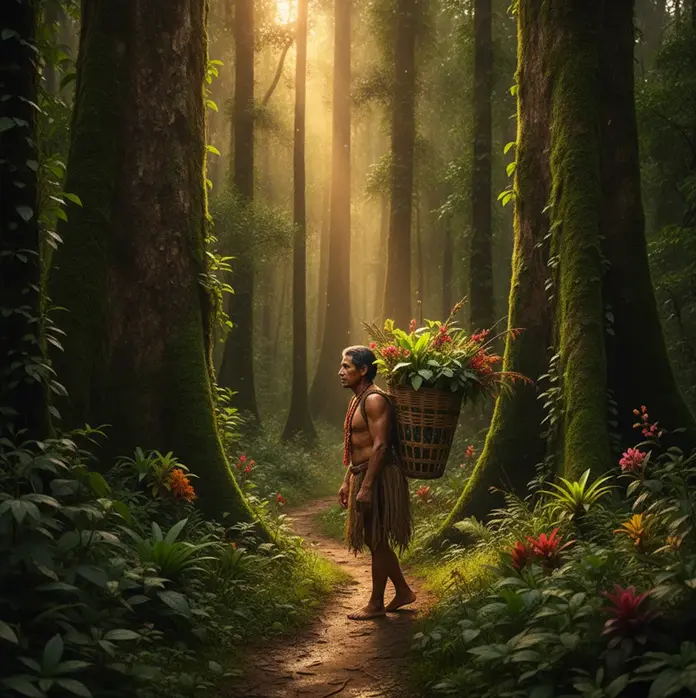
This is precisely the approach that Pure Brazil Tour favors in its Amazonian tours. Each excursion into the forest is designed as an immersion in living knowledge, led by guides who know their territory and wish to share it respectfully. To learn more about how these encounters unfold, you can consult our article on ethical encounters with local communities in the Amazon.
Security and knowledge transfer
It is important to remember that Amazonian medicinal plants should always be used under the supervision of specialists. Some of them, if prepared or dosed incorrectly, can pose risks. The role of the native guide is not only cultural; they are also responsible for the traveler's safety.
FAQ
Are the medicinal plants of the Amazon accessible during a trip to the forest?
Yes, provided you are accompanied by a knowledgeable native guide. In the Amazon rainforest, many medicinal plants are encountered during hikes, and local guides know how to identify them and explain their uses. This is not a specialized botanical tour: herbal remedies are a natural part of everyday life in the forest, and an experienced guide will spontaneously incorporate them into their explanations. However, it is strongly advised against picking or consuming plants without supervision.
Is it possible to bring medicinal plants from the Amazon into France?
This is a question many travelers ask. The answer depends on the form of the product: raw plants, seeds, and certain resins are subject to strict import regulations, particularly for phytosanitary reasons. However, processed products such as copaiba oil, annatto butter, or guarana-based dietary supplements can generally be brought back in luggage, provided the permitted quantity limits are respected. It is advisable to check with customs officials before departure.
What is the difference between a medicinal plant and a ritual plant in the Amazon?
The line between the two is often blurred in Amazonian traditions. Some plants, like ayahuasca, are primarily used in ritual and shamanic settings, with their psychotropic effects guided by specialists. Others, like cat's claw or copaiba oil, have essentially therapeutic uses in the common sense of the term. But in the indigenous worldview, healing the body and healing the mind are rarely separate: a plant can be both a physical remedy and a tool for spiritual connection. This is the true richness of this ancestral pharmacopoeia.
Medicinal plants of the Amazon: a living knowledge to be preserved
The Amazon rainforest is an open-air pharmacy whose secrets are slowly revealed, with each step and encounter. Understanding the medicinal plants of the Amazon means understanding a little better the people who are their guardians, and the forest that shelters them. If this subject fascinates you and you wish to experience it firsthand, our complete guide to traveling in the Brazilian Amazon in 2026 will help you prepare a stay that meets your expectations.
Plan your trip to the Amazon with Pure Brazil Tour
At Pure Brazil Tour, we don't discover the Amazon through a window; we experience it alongside those who have always known it. During our immersive trips, our native guides share their knowledge of medicinal plants, their traditional uses, and the stories surrounding them. Every discovery is made with respect for local communities and the forest, with an authentic approach, far removed from folkloric displays. For us, understanding the Amazon is first and foremost about learning to listen to those who have been its guardians for generations.
Do you dream of discovering the Amazon in a different way? Don't hesitate to contact us. We create tailor-made, authentic, and responsible trips to offer you a unique immersion in the heart of the world's largest rainforest, alongside passionate local guides. We would be delighted to help you plan your adventure.


Comments